
Introduction
Search Engine Optimization (SEO) is one of the most important digital marketing strategies used by businesses, bloggers, and organizations to increase their visibility on search engines like Google, Bing, and Yahoo. When people search for information, products, or services online, search engines display a list of websites ranked according to relevance and quality. SEO is the process of optimizing a website so that it appears higher in these search engine results pages (SERPs).
In simple words, SEO helps websites attract organic (non-paid) traffic by improving their ranking on search engines. When your website ranks higher, more people visit it, which can increase sales, leads, and brand awareness.
SEO is not a one-time activity; it is a continuous process involving research, optimization, monitoring, and improvement. The main goal is to make websites more useful, faster, and more relevant to users and search engines. Search engines use complex algorithms to determine which pages should appear first. SEO helps websites align with these algorithms so that search engines can easily understand and rank them.
This guide explains SEO in detail and walks through the complete step-by-step process.
What is SEO?
SEO stands for Search Engine Optimization. It is the practice of improving a website’s visibility in search engine results to attract more organic traffic.
When users type a query into a search engine, the search engine analyzes billions of webpages and displays the most relevant ones. SEO helps ensure that your webpage appears among the top results.
SEO involves several techniques including:
- Keyword research
- Website optimization
- Content creation
- Link building
- Technical improvements
- Performance analysis
The better optimized a website is, the higher it will rank in search results.
Why SEO is Important
SEO plays a crucial role in digital marketing and online business success. Here are some key reasons why SEO is important.
1. Increases Organic Traffic
Organic traffic refers to visitors who come to your website through search engines without paid advertising. SEO helps bring more of this traffic.
2. Builds Trust and Credibility
Websites that appear on the first page of search results are generally considered more trustworthy.
3. Improves User Experience
SEO encourages better website design, faster loading speed, and mobile-friendly pages.
4. Cost-Effective Marketing
Unlike paid advertising, SEO generates long-term traffic without continuous spending.
5. Competitive Advantage
Businesses that invest in SEO often outperform competitors in search rankings.
How Search Engines Work
Before learning the SEO process, it is important to understand how search engines work.
Search engines operate using three main processes:
1. Crawling
Search engines use bots (called crawlers or spiders) to discover new pages on the internet.
2. Indexing
After crawling a page, search engines store it in a massive database called the index.
3. Ranking
When someone searches for something, search engines analyze their index and display the most relevant results.
SEO helps websites become easier to crawl, index, and rank.
Types of SEO
SEO can be divided into three main categories.
1. On-Page SEO
On-page SEO refers to optimizing elements directly on a webpage.
Examples include:
- Title tags
- Meta descriptions
- Headings
- Keywords
- Content quality
- Internal linking
- Image optimization
2. Off-Page SEO
Off-page SEO refers to actions taken outside the website to improve rankings.
Examples include:
- Backlinks
- Social media signals
- Guest blogging
- Brand mentions
3. Technical SEO
Technical SEO focuses on improving the technical aspects of a website.
Examples include:
- Website speed
- Mobile optimization
- Site architecture
- XML sitemap
- SSL security
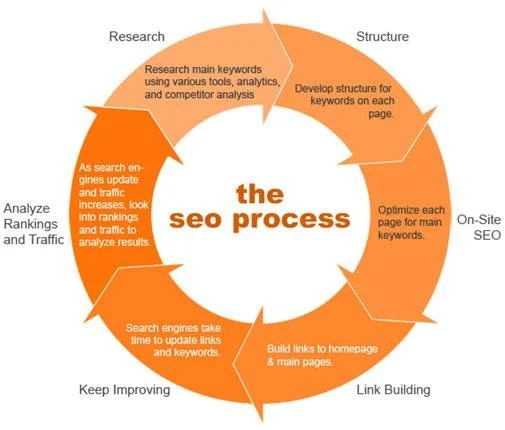
Complete SEO Process (Step-by-Step)
SEO involves a structured workflow. The following steps represent the typical SEO process used by professionals.
Step 1: Website Analysis and SEO Audit
The first step in SEO is analyzing the current performance of a website.
An SEO audit identifies issues that may affect rankings.
Common audit factors include:
- Website speed
- Mobile responsiveness
- Broken links
- Duplicate content
- Indexing problems
- Site structure
Tools used for SEO audit:
- Google Search Console
- Google Analytics
- SEMrush
- Ahrefs
- Screaming Frog
The goal is to understand the current strengths and weaknesses of the website.
Step 2: Keyword Research
Keyword research is the foundation of SEO.
Keywords are the words or phrases people type into search engines when looking for information.
Examples:
- “best salon near me”
- “digital marketing course”
- “how to improve website ranking”
The goal of keyword research is to find keywords that:
- Have high search volume
- Have low or moderate competition
- Match the user’s intent
Types of keywords include:
Short-Tail Keywords
Example: SEO
Long-Tail Keywords
Example: best SEO strategy for small businesses
Long-tail keywords often bring more targeted traffic.
Tools for keyword research include:
- Google Keyword Planner
- Ahrefs
- SEMrush
- Ubersuggest
Keyword research also involves analyzing competitors and identifying opportunities.
Step 3: Competitor Analysis
Competitor analysis helps understand what strategies successful websites are using.
Key elements to analyze:
- Competitor keywords
- Backlinks
- Content strategies
- Website structure
- Ranking pages
By studying competitors, businesses can identify gaps and opportunities.
For example, if competitors rank for certain keywords, those keywords may also be valuable targets.
Step 4: Website Structure Optimization
A well-organized website structure helps search engines understand content.
Best practices include:
- Clear navigation
- Logical page hierarchy
- Proper URL structure
- Internal linking
Example of a good structure:
Home
→ Services
→ Blog
→ Contact
This structure improves both user experience and search engine crawling.
Step 5: On-Page SEO Optimization
On-page SEO focuses on optimizing individual webpages.
Key on-page factors include:
Title Tags
The title tag tells search engines what the page is about.
Example:
“Best SEO Guide for Beginners”
Meta Descriptions
A short summary of the page that appears in search results.
Headings (H1, H2, H3)
Headings organize content and make it easier to read.
Keyword Placement
Keywords should appear in:
- Title
- Headings
- First paragraph
- Image alt text
Content Quality
High-quality content improves rankings and user engagement.
Internal Links
Links connecting pages within the same website.
Image Optimization
Images should include alt text and be compressed for faster loading.
Step 6: Content Creation
Content is one of the most important elements of SEO.
Search engines prioritize websites that provide useful and valuable information.
Types of SEO content include:
- Blog posts
- Guides
- Tutorials
- Videos
- Infographics
- Product pages
Good SEO content should be:
- Informative
- Relevant
- Unique
- Easy to read
- Optimized with keywords
Regular content updates help maintain search rankings.
Step 7: Technical SEO Implementation
Technical SEO ensures that a website functions properly.
Important technical SEO elements include:
Website Speed
Faster websites provide better user experience and rank higher.
Mobile Optimization
Most users browse websites using mobile devices.
Secure Website (HTTPS)
Secure websites are trusted by search engines.
XML Sitemap
A sitemap helps search engines find and index website pages.
Robots.txt
This file tells search engines which pages they should or should not crawl.
Step 8: Link Building (Off-Page SEO)
Link building is a major ranking factor.
Backlinks are links from other websites pointing to your site.
Search engines treat backlinks as votes of trust.
The more high-quality backlinks a website has, the more authority it gains.
Common link-building methods include:
- Guest blogging
- Directory submissions
- Influencer outreach
- Content marketing
- Social media sharing
Quality matters more than quantity when building backlinks.
Step 9: Local SEO Optimization
Local SEO helps businesses appear in local search results.
Example search queries:
- “salon near me”
- “restaurant in Dammam”
Local SEO strategies include:
- Creating a Google Business Profile
- Adding location keywords
- Getting customer reviews
- Local directory listings
Local SEO is especially important for small businesses.
Step 10: Monitoring and Analytics
SEO requires continuous monitoring and improvement.
Important metrics to track include:
- Organic traffic
- Keyword rankings
- Click-through rate (CTR)
- Bounce rate
- Conversion rate
Tools for monitoring SEO performance include:
- Google Analytics
- Google Search Console
- Ahrefs
- SEMrush
Analyzing data helps identify areas that need improvement.
Step 11: Continuous Optimization
SEO is not a one-time task.
Search engine algorithms change frequently.
Websites must continuously:
- Update content
- Fix technical issues
- Build backlinks
- Improve user experience
Successful SEO strategies focus on long-term growth.
Common SEO Tools
Many tools help improve SEO performance.
Popular SEO tools include:
- Google Analytics
- Google Search Console
- Ahrefs
- SEMrush
- Moz
- Screaming Frog
- Ubersuggest
These tools provide valuable data for optimizing websites.
Common SEO Mistakes
Many beginners make mistakes when doing SEO.
Some common mistakes include:
Keyword Stuffing
Overusing keywords can harm rankings.
Duplicate Content
Search engines prefer unique content.
Ignoring Mobile Optimization
Mobile usability is critical.
Poor Website Speed
Slow websites lose visitors and rankings.
Low-Quality Backlinks
Spammy links can damage SEO performance.
Avoiding these mistakes improves overall SEO results.
Future of SEO
SEO continues to evolve as search engines improve their algorithms.
Future trends include:
- AI-driven search
- Voice search optimization
- Mobile-first indexing
- User experience signals
- Video and visual search
Businesses that adapt to these trends will remain competitive.
Conclusion
Search Engine Optimization is a powerful digital marketing strategy that helps websites increase visibility, attract organic traffic, and grow online businesses.
The SEO process involves multiple steps including:
- Website audit
- Keyword research
- Competitor analysis
- Website structure optimization
- On-page SEO
- Content creation
- Technical SEO
- Link building
- Local SEO
- Analytics and monitoring
SEO is a long-term investment that requires patience, consistency, and continuous improvement. By following a structured SEO strategy and focusing on user experience, businesses can achieve sustainable growth and higher search engine rankings